Thematic Investing 101: How Stories Become Stock Ideas
Why the most useful investment questions start with a narrative — not a ticker.
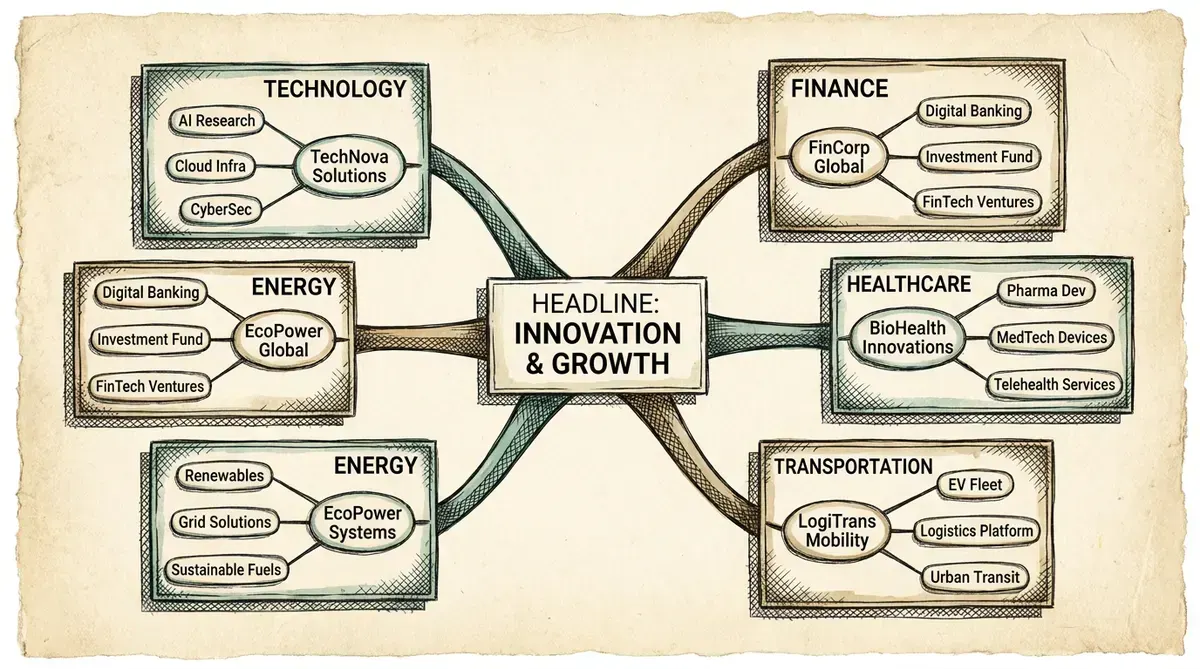
What thematic investing actually is
Most beginners learn the market through sectors: Technology, Healthcare, Energy. That structure is useful for navigation, but it is a poor map for many of the questions investors actually ask.
Thematic investing starts differently. You begin with a force — artificial intelligence adoption, rising defense spending, electricity demand, reshoring, obesity drugs, drone warfare — and ask which companies are exposed to it. Those companies often sit in different sectors. A power utility, a transformer manufacturer, a data-centre operator, and a chip-equipment maker can all belong to the same theme even though their industry labels differ.
The goal is not to predict headlines. It is to build a researchable map: which businesses are connected to a narrative, how they relate to each other, and what evidence would support or weaken a view.
Why themes matter more than filters
Traditional screeners excel at questions like "P/E below 15 and debt/equity below 0.5." They struggle with questions like:
- Which companies benefit if electricity demand accelerates for a decade?
- If conflict disrupts a supply chain, who has pricing power and who has substitute risk?
- Is AI spending showing up in semiconductors only, or across power, networking, and construction too?
Those are story questions. Answering them requires grouping companies by economic exposure, not just by GICS industry codes.
The three layers of a theme
A durable thematic research process usually works through three layers:
- The driver. What changed, or what is changing? A technology reaching cost parity, a policy decision, a commodity constraint, a shift in consumer behaviour, a geopolitical event.
- The chain. Who builds, supplies, enables, operates, or consumes what the driver affects? Leaders, second-order beneficiaries, and companies with hidden exposure often live in different industries.
- The market evidence. Are prices, volumes, fundamentals, and news confirming that the market is repricing the chain — or is the story still early, selective, or crowded?
Relaxfolio is designed around that sequence: ask about the theme, review the grouped companies, then open individual names for deeper work.
Themes are not predictions
A common mistake is treating a theme as a guarantee. "AI will grow" does not mean every AI-labelled stock will outperform. Themes can be:
- Real but already priced. The narrative is well known and leadership is narrow or extended.
- Real but misallocated. The market is buying the obvious names while better-exposure businesses lag.
- Real but delayed. Fundamentals take time to catch up to the story.
- Wrong or overstated. The narrative fades before the economics materialise.
Good thematic work asks not only "what could benefit?" but also "what is the market already assuming?" and "what would prove me wrong?"
How this differs from momentum or value work
Thematic investing overlaps with other styles but emphasises a different starting point:
- Momentum often begins with price leadership and asks whether the move is broad or isolated.
- Value often begins with business quality and valuation and asks whether the market is mispricing durability.
- Thematic begins with a narrative and asks which companies are structurally exposed — then uses price, fundamentals, and news to judge timing and selectivity.
Many experienced investors combine all three. The theme tells you where to look; the other tools help you decide what deserves further work.
A simple way to practice
Pick one theme you can explain in a sentence — not one you read about once, but one you genuinely understand:
- "More electricity is needed for data centres and electrification."
- "Western defence budgets are rising after years of underinvestment."
- "Weight-loss drugs are changing food, healthcare, and med-device demand."
Then list five companies you think are exposed. For each, ask: direct exposure or indirect? Leader or supplier? Already discussed in the news or still under the radar? That exercise alone will show you why sector labels are insufficient.
Next in this series: How to Map an Investment Theme to the Right Stocks and Geopolitics and Thematic Investing.
Ask "macro themes" or "AI theme heatmap" to review grouped US stocks and ETFs connected to a narrative. Explore Relaxfolio →
This article is for educational purposes only and is not investment advice. All investing involves risk, including possible loss of principal.
Put this into practice tonight
Ask Relaxfolio in plain English and get a researched answer in minutes.
Get started